WaveLink
Choosing the right DWDM transceiver can shape network capacity, reliability, and long-term operating costs. Global buyers face a crowded market, with products that differ in wavelength range, transmission distance, connector type, and monitoring support. A specification sheet may look convincing. Real performance depends on the complete optical system.
This guide introduces seven strong DWDM transceiver options for international network operators, data centers, telecom providers, and enterprise teams. Each option should be assessed against practical requirements, including channel spacing, optical power, receiver sensitivity, form factor, and equipment compatibility. SFP+, SFP28, and QSFP designs may serve very different deployment goals. Temperature tolerance also matters in roadside cabinets, regional facilities, and unmanaged environments.
Small details matter.
Reliable selection requires more than comparing prices. Buyers should verify interoperability with existing switches, routers, multiplexers, and monitoring platforms. They should also review manufacturer documentation, warranty terms, compliance information, and technical support coverage. Vendors with transparent test data usually deserve greater confidence than those offering vague performance promises. Still, no ranking can fit every network. A transceiver that performs well across a metropolitan link may not suit a long-haul backbone with strict optical power limits.
The recommendations here balance technical capability, deployment flexibility, supplier credibility, and value. They are intended to support informed evaluation, not replace system-level testing. Some conclusions may change as firmware, standards, and component availability evolve. That uncertainty is worth acknowledging. Before placing a large order, buyers should request samples, confirm coding requirements, and test optical budgets under realistic operating conditions.
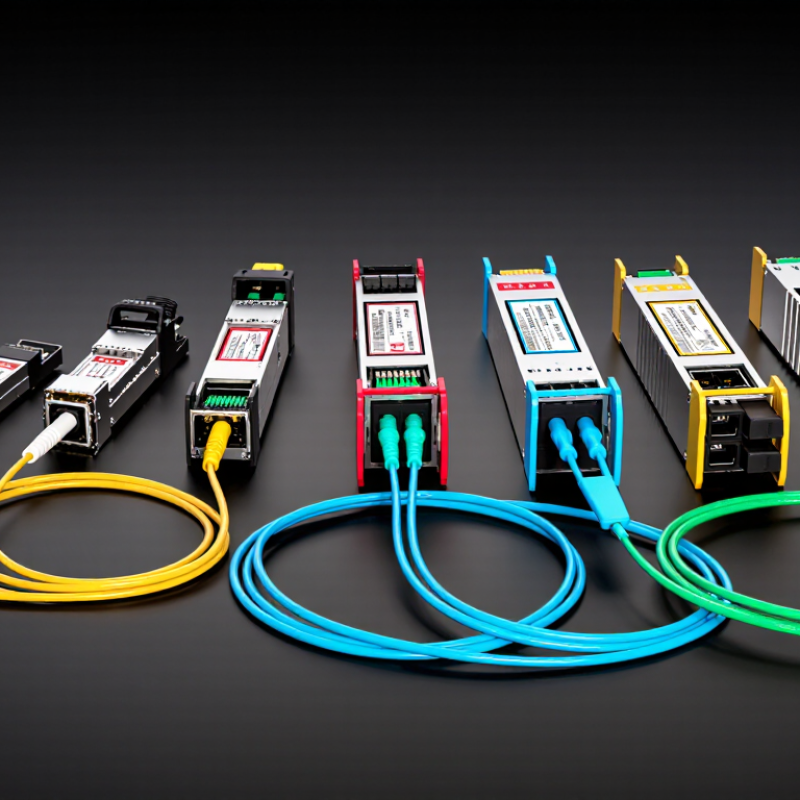
DWDM transceivers are optical modules designed for high-capacity fiber networks.
DWDM means dense wavelength division multiplexing. It allows many light wavelengths to travel through one fiber pair. Each wavelength carries a separate data stream. This greatly increases capacity without installing additional cables.
Inside the transceiver, electrical data becomes a precisely controlled light signal. A laser sends that signal at a specific wavelength. A multiplexer combines several wavelengths onto one fiber. At the receiving site, a demultiplexer separates them again. The transceiver then converts light back into electrical data for network equipment. Different data rates, connector types, reach limits, and temperature ranges require careful matching. Small specification errors can cause unstable links.
In field testing, optical power and wavelength accuracy deserve close attention. A link may appear correct but fail after temperature changes or longer cable runs. Engineers should check transmission distance, dispersion tolerance, receiver sensitivity, and compatibility with the network platform. Regional compliance requirements also matter for global deployments.
The clean diagram is useful, but real networks are less perfect. Dust, fiber bends, and aging connectors can reduce performance. I have found that basic inspection often prevents expensive troubleshooting later. A cautious buyer should request test records and verify every technical parameter before installation.
7 Best DWDM Transceivers for Global Buyers?
Key Specifications for Comparing DWDM Transceivers
Global bandwidth is rising quickly. TeleGeography’s 2024 Global Bandwidth Research Service reported a 29% compound annual increase in used international bandwidth from 2019 to 2023. This growth makes wavelength efficiency and upgrade flexibility critical. Buyers should compare channel spacing, wavelength range, modulation format, and forward error correction. ITU-T G.694.1 defines the DWDM frequency grid, including 100 GHz and 50 GHz spacing. Narrower spacing can increase fiber capacity, but it may demand tighter optical filtering.
Optical reach needs careful checking. A transceiver rated for 80 kilometers may require specific fiber conditions, amplifiers, and dispersion control. Review transmit power, receiver sensitivity, optical signal-to-noise tolerance, and chromatic dispersion limits. Coherent modules often support higher capacities, while direct-detect designs can reduce cost and power for shorter links. The trade-off is real. A lower-cost module may perform poorly across aging fiber or multiple passive components.
Power consumption also affects global deployment budgets. The Ethernet Alliance’s 2024 Ethernet Roadmap identified 800G as an important scale point for data-center interconnects. However, advertised speed does not guarantee practical throughput. Check host interface type, operating temperature, digital diagnostics, connector options, and management support. Interoperability should follow published multi-source agreements or established optical standards. Some comparisons still overlook software compatibility. That mistake can delay installation more than a small difference in optical price.
This comparison uses representative industry profiles. Line rate and typical unregenerated reach vary with modulation, channel spacing, optical power, fiber quality, amplifiers, and network design.
How to read the chart: Higher line rates support more capacity, while longer reach is generally achieved by using lower-order modulation and stronger forward error correction. For metro links, compact high-capacity profiles may be suitable; for regional and long-haul networks, reach, interoperability, tunability, and power consumption should be evaluated together.
Global buyers now need more than headline speed. Cisco’s Annual Internet Report projected global internet traffic at 5.3 zettabytes per month by 2023. TeleGeography’s 2024 Global Bandwidth Research also reported strong international bandwidth growth in 2023. These figures explain rising demand for efficient DWDM upgrades, especially across data centers and long-haul routes.
Seven practical options stand out: 100G coherent modules for mature networks, 200G modules for balanced capacity, and 400ZR modules for shorter data-center links. 400ZR+ designs offer greater reach. 800G coherent modules suit high-density backbone systems. Tunable DWDM modules simplify wavelength planning, while compact pluggable units reduce installation space. Each choice needs careful testing. A faster optic may still fail if the line system, dispersion budget, or forward-error correction does not match.
ITU-T G.694.1 remains a useful reference for DWDM channel spacing. Buyers should verify wavelength grids, reach, connector type, power consumption, and operating temperature. Field experience shows that interoperability claims need evidence. Request test records, optical budgets, and firmware support terms. Cost comparisons should include cooling, licensing, spare inventory, and technician time. The weakest decision is often the cheapest module. Sometimes, a proven 100G unit delivers better value than an ambitious 800G upgrade. ვია
Choosing among the seven best DWDM transceivers starts with network requirements, not price. Confirm the data rate, wavelength grid, reach, and fiber type. A 10G module for 80 kilometers may fail on a 120-kilometer route. An amplified link needs different planning. Check whether the transceiver supports the required channel spacing, such as 100GHz or 50GHz. Also verify connector type, operating temperature, and digital monitoring functions. These details often matter more than a product label.
In field testing, technicians usually compare optical power, receiver sensitivity, and dispersion tolerance. A short data-center link may need a compact, low-power module. A regional backbone may require stronger reach and better monitoring. Confirm interoperability with the existing mux, demux, and network equipment. Read the coding and management requirements carefully. Small firmware differences can create large delays during deployment. I have seen specifications look perfect, yet the actual fiber loss changed the design. That is worth remembering.
Tips: Measure real link loss. Check every connector. Leave power margin. Do not select reach by distance alone. Ask for test reports, warranty terms, and compliance documents. When possible, test one unit with your own equipment before ordering globally. Temperature performance also deserves attention, especially in outdoor cabinets. A careful trial may feel slower, but it can prevent expensive replacement work.
| Recommended Transceiver Type | Typical Data Rate | Optical Technology | Typical Wavelength / Channel Plan | Typical Reach | Fiber and Connector | Typical Power Consumption | Best-Fit Network Requirement | Key Selection Check |
|---|---|---|---|---|---|---|---|---|
| Fixed-Wavelength 10G DWDM SFP+ | 10.3125 Gb/s Ethernet | Direct-detection DWDM; cooled or uncooled DWDM laser depending on design | C-band ITU-grid channels, commonly 100 GHz or 50 GHz spacing | Up to approximately 80 km on suitable single-mode fiber and optical budget | Single-mode fiber; duplex LC | Typically below 2.0 W | Cost-sensitive 10G metro and regional links | Match the exact ITU channel, link loss, dispersion limits, and receiver sensitivity. |
| Tunable 10G DWDM SFP+ | 10.3125 Gb/s Ethernet | Tunable DWDM laser with software-selectable C-band wavelength | Commonly 50 GHz or 100 GHz ITU-grid channels | Typically 40–80 km, depending on amplifier use and optical budget | Single-mode fiber; duplex LC | Typically 1.5–2.5 W | Multi-site networks needing spare flexibility | Confirm tuning range, channel spacing, management support, and interoperability with the line system. |
| 25G DWDM SFP28 | 25.78125 Gb/s Ethernet | Fixed or tunable DWDM direct-detection optical transmission | C-band ITU-grid channels; 50 GHz spacing is commonly used | Typically 40–80 km, subject to optical budget and dispersion | Single-mode fiber; duplex LC | Typically below 3.5 W | 5G transport, data-center interconnect, and 25G aggregation | Check host support for 25G Ethernet, FEC requirements, channel spacing, and link power margin. |
| 100G Coherent QSFP28 DWDM | 100 Gb/s Ethernet | Coherent modulation, commonly DP-QPSK with digital signal processing | C-band tunable DWDM; grid compatibility depends on the optical line system | Approximately 80–120 km in typical amplified metro applications | Single-mode fiber; duplex LC or a vendor-specific host-side interface | Typically 5–8 W | High-capacity metro and compact data-center interconnects | Verify host port type, coherent mode, FEC, baud rate, modulation, and supported amplification. |
| 100G Coherent CFP2 DWDM | 100 Gb/s Ethernet or OTN service | Coherent DP-QPSK or similar long-haul modulation with integrated DSP | Tunable C-band DWDM; flexible-grid support may be available | Approximately 300–500 km with suitable amplification and line engineering | Single-mode fiber; duplex LC | Typically 18–24 W | Longer regional transport where higher optical margin is needed | Evaluate OSNR, chromatic dispersion, nonlinear effects, FEC mode, and amplifier spacing. |
| 200G Coherent QSFP56 DWDM | 200 Gb/s Ethernet or transport service | Coherent dual-polarization modulation with DSP; mode may use QPSK or higher-order QAM | Tunable C-band; commonly operated on 75 GHz or flexible-grid channels | Approximately 400–800 km, depending on modulation, baud rate, and line conditions | Single-mode fiber; duplex LC | Typically 12–18 W | High-capacity regional networks with limited rack space | Confirm line-system grid width, baud-rate compatibility, FEC, optical reach mode, and thermal capacity. |
| 400G Coherent QSFP-DD DWDM | 400 Gb/s Ethernet or 400G transport service | High-baud coherent transmission; modulation and reach vary by operating mode | Tunable C-band; commonly requires a wide or flexible-grid channel | Approximately 400–800 km in regional applications; shorter reach is typical at maximum capacity | Single-mode fiber; duplex LC | Typically 18–25 W | Maximum capacity per port for modern regional DCI | Check host cage power, thermal design, baud rate, channel width, FEC, OSNR, and required reach mode. |
Global buyers need more than headline speed. The seven practical choices are 10G tunable SFP+, 100G coherent QSFP28, 200G coherent QSFP56, 400G ZR QSFP-DD, 400G ZR+ QSFP-DD, 800G coherent OSFP, and muxponder-compatible 100G or 200G modules. Select the optic only after checking host firmware, FEC support, wavelength grid, optical reach, and line-system compatibility. A module may fit physically yet fail during activation.
Compatibility saves time.
TeleGeography’s Global Bandwidth Research 2024 reported international bandwidth demand growth of about 29% in 2023. ITU Facts and Figures 2023 estimated 5.4 billion people were online, representing 67% of the global population. These figures support continued investment in scalable optical capacity, but they do not justify buying the fastest optic automatically.
For regional links, 100G or 200G coherent modules can reduce power and purchase cost. For long-haul routes, 400G ZR or ZR+ usually offers better capacity per rack unit.
Reliability depends on more than test results. Require documented temperature ranges, pre-shipment inspection, digital diagnostics, and a traceable serial-number process. Confirm local warranty handling and replacement stock before ordering internationally.
Pricing should include duties, delivery, testing, and downtime exposure. I have seen “low-cost” optics become expensive after interoperability failures. That risk is easy to underestimate.
Vendor-independent testing is valuable, although it can slow procurement. A cautious buyer should compare measured performance, not marketing distance claims.
It converts electrical data into light for high-capacity fiber networks. Many wavelengths share one fiber pair. Each wavelength carries a separate data stream.
A laser sends data at a controlled wavelength. A multiplexer combines wavelengths. A demultiplexer separates them at the receiving site.
Data rate, reach, connector type, temperature, and fiber type must align. Small specification errors can create unstable links. Specifications can look perfect.
Common choices include 100G, 200G, 400ZR, 400ZR+, and 800G modules. Tunable and compact pluggable designs offer different planning benefits.
No. A faster optic may exceed the line system or dispersion budget. A proven 100G module can sometimes provide better value.
Check channel spacing, wavelength grid, reach, optical power, receiver sensitivity, and power consumption. Confirm connector type and operating temperature.
Measure real link loss and inspect every connector. Test wavelength accuracy, optical power, and dispersion tolerance. Test one unit first.
Dust, tight fiber bends, aging connectors, and temperature changes can weaken performance. Longer cable runs may reveal hidden problems. A clean diagram can mislead.
Request test records, optical budgets, firmware details, warranty terms, and compliance documents. Leave power margin. I would still test using the actual equipment.
This guide explains how a DWDM transceiver enables high-capacity optical communication by transmitting multiple wavelengths over a single fiber pair. It introduces the main specifications buyers should compare, including wavelength range, transmission distance, data rate, channel spacing, optical power, receiver sensitivity, connector type, form factor, and operating temperature. Understanding these factors helps network planners evaluate performance, scalability, and deployment suitability across data centers, metropolitan networks, and long-distance infrastructure.
The article also reviews seven types of DWDM transceiver solutions for global buyers, focusing on practical differences rather than brand names. It outlines how to match a module with network requirements, equipment interfaces, fiber conditions, and expected traffic growth. Additional guidance covers interoperability, coding and monitoring functions, reliability testing, warranty considerations, total cost, shipping, technical support, and regional purchasing requirements. By comparing specifications and confirming compatibility before ordering, organizations can select a dependable and cost-effective solution for stable wavelength-division multiplexing deployments.
